
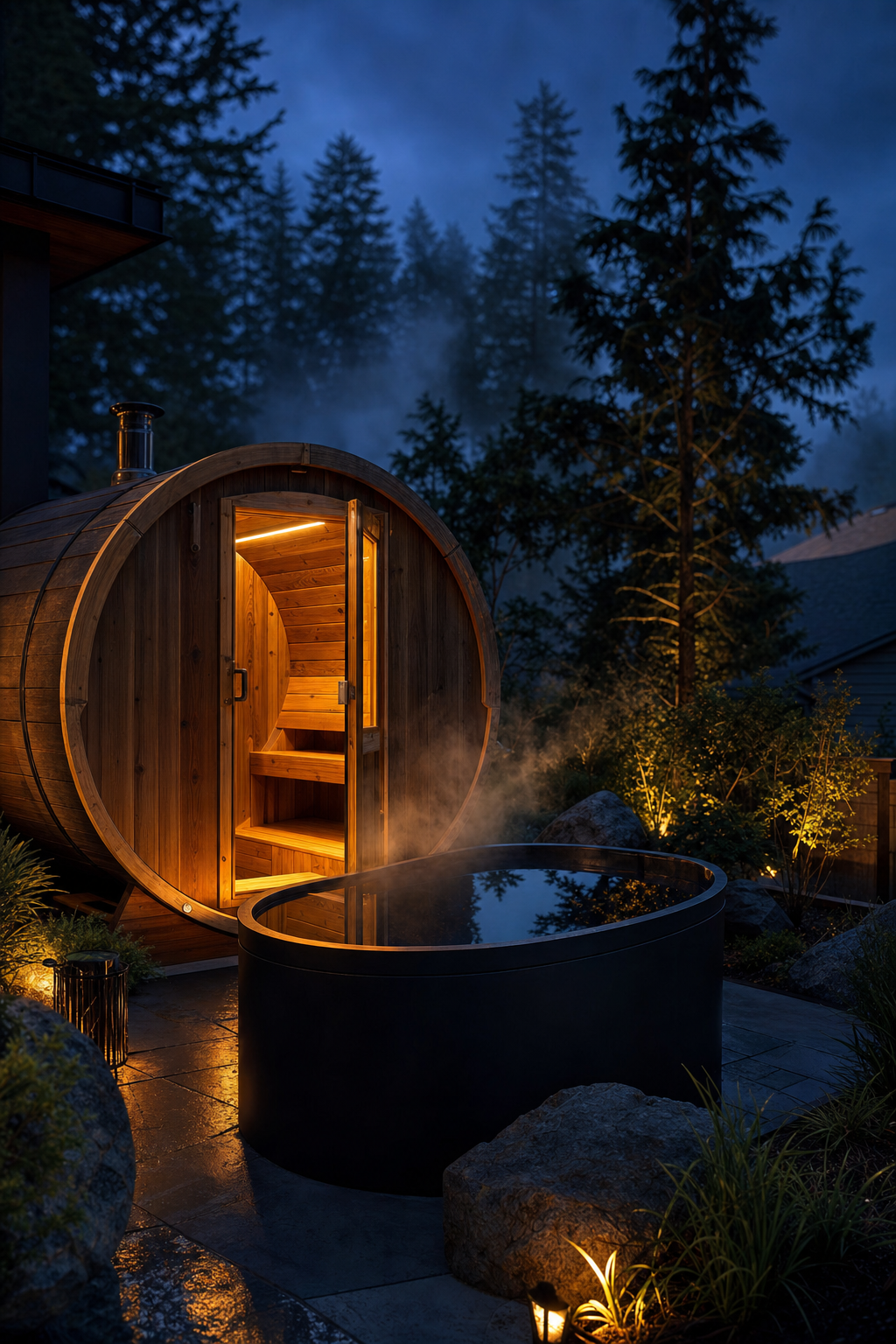
Proper sauna cold plunge hydration electrolytes Vancouver protocols involve pre-loading sodium before your session and replenishing essential minerals like potassium and magnesium immediately after contrast therapy. Because high-heat sweating and cold-induced urination cause significant fluid loss, drinking a supplement with at least 400mg of sodium within an hour of your session is vital for recovery.
Vancouver professionals often leave a rigorous contrast therapy session feeling revitalized yet strangely depleted. You might notice a lingering headache or a dip in mental clarity despite the initial endorphin rush. This exhaustion occurs because high heat and sudden cold exposure demand more than just standard tap water for recovery. In a city where we balance demanding careers with mountain trails, a casual approach to hydration will not suffice. This guide examines the science behind the double drain of sauna sweat and cold induced diuresis. You will learn the specific roles of sodium, potassium, and magnesium in maintaining cellular balance; furthermore, we will outline a practical timing protocol for your next session. Understanding these physiological requirements ensures your recovery practice builds genuine resilience instead of simply leaving you dehydrated.
Why Vancouver Professionals Need a Specific Hydration Protocol for Contrast Therapy
Vancouver’s professional culture is defined by high output. For many, the week is a cycle of back-to-back meetings fueled by diuretic espresso-based drinks, followed by grueling weekend excursions like trail running in North Vancouver or skiing at Whistler. These pursuits demand elite recovery, which is why sauna and cold plunge services have become essential tools for the city’s high-performers. However, using these modalities without a precise protocol can lead to unexpected fatigue.
While contrast therapy offers profound physical and mental rejuvenation, it creates a unique physiological "double drain" on your body’s resources. You are not just losing water; you are experiencing a simultaneous depletion through two distinct biological pathways. The intense heat of the sauna triggers significant sweat and mineral loss, while the sudden immersion of a cold plunge forces a shift in blood volume that signals the kidneys to increase fluid output. At Nordic Edge, we view recovery as a science that goes beyond the basic advice to just drink more water. Successfully navigating a session requires a specific understanding of sauna cold plunge hydration electrolytes Vancouver needs to maintain executive function and peak physical performance. Simply refilling a water bottle is insufficient for the specialized demands of contrast therapy.
The Sauna Sweat Factor: How Much Water and Sodium You Actually Lose

A standard 20 minute session in a high performance sauna environment results in a measurable physiological shift. Research indicates that during this timeframe, the average individual loses between 500ml and 1 liter of fluid through sweat. While this volume is significant, the composition of that fluid is what matters most for those seeking a true recovery edge. Sweat is not merely water; it is a concentrated solution of essential minerals, with sodium being the primary component lost through the skin.
On average, you can expect to lose between 450mg and 700mg of sodium per session. This is the critical mineral responsible for fluid balance and nerve signaling. Relying solely on plain water to rehydrate can inadvertently lead to a state where the remaining sodium in your blood becomes too diluted. Transitioning from plain water to dedicated electrolyte water is essential when utilizing professional sauna and cold plunge services.
Fluid Component | Estimated Loss (20-min Session) | Role in Recovery |
|---|---|---|
Total Water | 500ml - 1,000ml | Temperature regulation and blood volume |
Sodium | 450mg - 700mg | Nerve function and fluid retention |
Potassium & Magnesium | Trace amounts | Muscle contraction and nervous system regulation |
Vancouver’s humid coastal climate often leads people to believe they are better hydrated than they actually are. While high humidity might slow down the rate of sweat evaporation, it does not alter your internal physiological response to intense heat. The sodium depletion occurs regardless of the outdoor moisture levels. Understanding this distinction is the first step toward mastering the protocol for sauna cold plunge hydration electrolytes Vancouver professionals use to maintain cognitive clarity and physical readiness.
Does Cold Plunge Dehydrate You? The Truth About Cold Induced Diuresis

While the sweat lost in a sauna is obvious, the fluid loss during a cold plunge is often invisible. Many users ask if cold immersion actually causes dehydration. The physiological answer is yes, but through a mechanism entirely different from sweating. This process is known as cold-induced diuresis. When your body enters near-freezing water, your peripheral blood vessels immediately constrict. This is a survival mechanism designed to protect your internal organs by shunting blood from your extremities toward your core.
As this blood volume concentrates in your torso, your body's sensors interpret the increased central pressure as a sign of excess fluid. In response, the kidneys are signaled to filter the blood and produce more urine to reduce that perceived fluid overload. You might notice a sudden urge to use the restroom shortly after a session; this is your body actively dumping fluids. Because there is no sweat involved, this silent dehydration often goes unnoticed until symptoms like lethargy or a dry mouth set in later in the day.
For those using sauna and cold plunge services, this means the cold tank is not a place to cool off and rebalance. It is a second exit point for your body’s water. Even if you have not broken a sweat in the plunge, you are likely leaving the water more fluid depleted than when you entered. This realization is crucial for maintaining the precise sauna cold plunge hydration electrolytes Vancouver athletes need to sustain their output. Neglecting this silent drain is a common mistake that turns a high-performance recovery session into a source of avoidable fatigue.
The Contrast Therapy Double Drain: Sauna and Cold Plunge Interaction
The interaction between intense heat and sudden cold creates a compounded physiological tax that exceeds the sum of its parts. When you engage in multiple rounds, your body is simultaneously losing minerals through the skin and processing high volumes of fluid through the kidneys. This creates a dual exit strategy for your hydration; the standard advice of drinking a single glass of water becomes obsolete.
For high-performers, this depletion is particularly risky. A typical session at Nordic Edge involves three to four rounds of contrast. Each heat cycle extracts more sodium, while each cold cycle triggers another bout of diuresis. By the final round, the cumulative loss can lead to a significant drop in blood volume and electrolyte concentration. When you book your recovery session, understanding this compound effect is vital for protecting your executive function. To maintain the mental sharpness required for a afternoon board meeting or the physical stamina for a trail run, you must move beyond casual sipping.
Adopting a specific protocol for sauna cold plunge hydration electrolytes Vancouver professionals need ensures that the 'reset' feeling persists without an accompanying crash. This proactive approach prevents the brain fog that often follows intense sauna and cold plunge services, allowing you to transition directly back into high-stakes environments without the lethargy caused by mineral imbalance.
The Honest Electrolyte Breakdown: Sodium, Potassium, and Magnesium
To master the sauna cold plunge hydration electrolytes Vancouver protocol, you must prioritize the three essential minerals lost during thermal stress. Sodium is your most significant loss and the primary driver of fluid balance; it maintains blood pressure and prevents the post-session fatigue often mistaken for heat exhaustion. Potassium supports electrical signaling in muscle tissue, effectively preventing the involuntary cramping or heavy leg sensation that can follow intense leg days or trail runs. Magnesium acts as a neurological anchor, facilitating the shift from a high-stress sympathetic state to the restorative parasympathetic state, which is responsible for that signature deep relaxation.
Mineral | Primary Role | Priority in Contrast Therapy |
|---|---|---|
Sodium | Fluid retention & blood pressure | High (Primary loss) |
Potassium | Muscle contraction & nerve signals | Moderate |
Magnesium | Nervous system & sleep quality | Essential for the "reset" |
Many professionals reach for commercial sports drinks, yet these are frequently insufficient. Most contain excessive sugar and only a fraction of the necessary sodium, often providing less than 250mg per bottle. For a session involving multiple rounds of sauna and cold plunge services, professional-grade mixes like LMNT offer a more appropriate 1,000mg sodium dose. Alternatively, a practical DIY solution involves mixing high-quality sea salt with fresh lemon juice in filtered water, focusing on mineral density rather than caloric intake. This specialized replenishment is what separates a standard sweat from a high-performance recovery experience.
Optimal Timing: Should You Take Electrolytes Before, During, or After a Sauna?

Understanding the specific minerals is only half the battle; the timing of your intake determines how your body handles the thermal stress. Effective recovery begins before you step into the heat. Your primary goal is blood volume expansion. Consuming a high sodium electrolyte drink approximately one hour before utilizing sauna and cold plunge services allows the body to retain enough fluid to counter the dual drain of sweating and diuresis. This pre-load acts as a safety reservoir, protecting your heart rate and cognitive performance during the session.
During the session, sip plain, filtered water between rounds. The rapid shifting of blood from your extremities to your core makes digestion less efficient. Overwhelming the gut with concentrated minerals while your body is under thermal stress can lead to digestive discomfort or nausea. Use this period solely to manage thirst and maintain a comfortable baseline.
The hour following your final exit is the critical replenishment window where full mineral replacement must occur. This is the period when the body is most receptive to absorbing sodium, potassium, and magnesium. Properly hitting this window reduces sauna fatigue and prevents the lingering brain fog that sometimes follows intense recovery. When you book your recovery session, adhering to this protocol ensures your nervous system stabilizes quickly, leading to deeper sleep and peak readiness the following morning. This precise timing is the professional standard for the sauna cold plunge hydration electrolytes Vancouver high performers rely on to maintain their edge.
Local Vancouver Hydration Tips for Weekend Warriors
Vancouver’s weekend warriors often arrive at our mobile sauna rentals after a morning of intense exertion. If you have spent the early hours ascending the Grouse Grind or cycling the Sea to Sky Highway, your baseline hydration is already compromised. Starting a recovery session in a deficit significantly increases the risk of the double drain effect. Many professionals make the mistake of relying on espresso or black coffee to power through the afternoon. Because caffeine acts as a diuretic, it further depletes your fluid levels and makes it harder for your body to safely manage the heat stress of our sauna and cold plunge services.
For clean, local hydration, prioritize high quality filtered water or additive-free coconut water. Coconut water is a particularly effective local option because it provides a natural source of potassium, which supports muscle function and prevents cramping after a long trail run or mountain session. By integrating these specific fluids into your routine, you can better manage the sauna cold plunge hydration electrolytes Vancouver athletes require to maintain their edge. Focusing on mineral-dense liquids ensures you are genuinely rehydrating your cells rather than just quenching temporary thirst.
How to Tell if You Are Dehydrated After a Nordic Edge Session
Recognizing the difference between a successful recovery and a state of depletion is essential for maintaining your professional edge. A properly executed session at Nordic Edge should result in the 'Nordic glow,' a state characterized by heightened mental clarity, reduced inflammation, and a sense of calm euphoria. If you instead experience what many call a 'sauna hangover,' which includes brain fog, a dull headache, or lingering lethargy, your body is signaling a significant deficit in the sauna cold plunge hydration electrolytes Vancouver protocols require. These symptoms are rarely a reaction to the temperature itself; they are the physiological result of unreplaced sodium and fluid.
To assess your status immediately, use these two professional benchmarks:
Assessment Method | Dehydration Indicator | Optimal State |
|---|---|---|
Skin Turgor (Pinch Test) | Skin on the back of the hand remains tented or is slow to flatten. | Skin snaps back to its original position instantly. |
Urine Color Check | Dark yellow, amber, or honey-colored. | Pale straw or almost clear. |
If you fail either test after using our sauna and cold plunge services, increase your sodium and fluid intake immediately. Monitoring these metrics ensures you can book your recovery session with confidence, knowing you have the specific tools to avoid the post-session crash.
Staying hydrated during your sauna and cold plunge sessions in Vancouver is about more than just drinking water. It requires a thoughtful balance of electrolytes to replace what you lose through sweat. While understanding these basics is a great start, optimizing your recovery routine for your specific body can feel overwhelming. If you want expert help refining your wellness practice, our team is ready to guide you. You can explore our Services to see how we help clients achieve peak performance and recovery through personalized protocols.