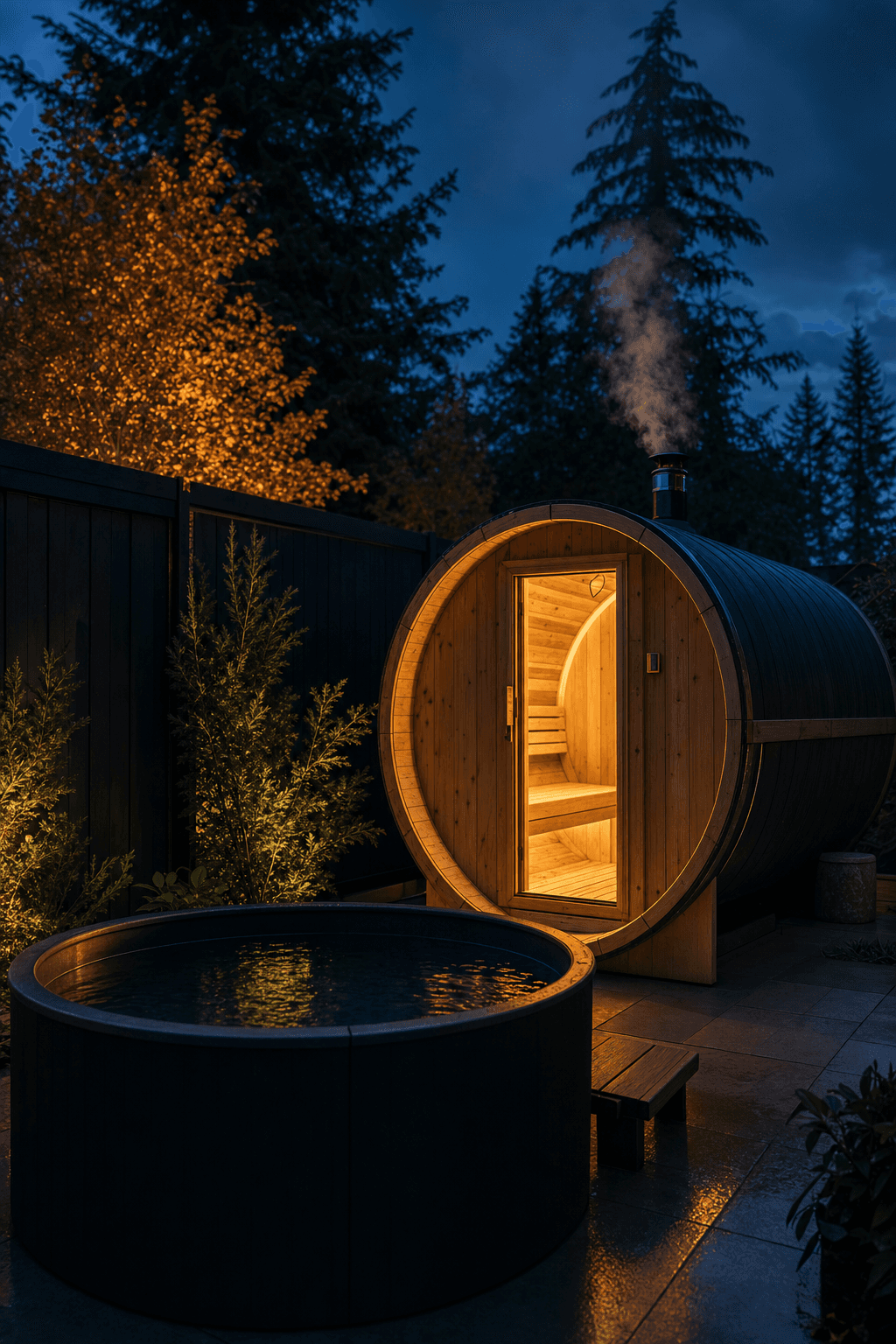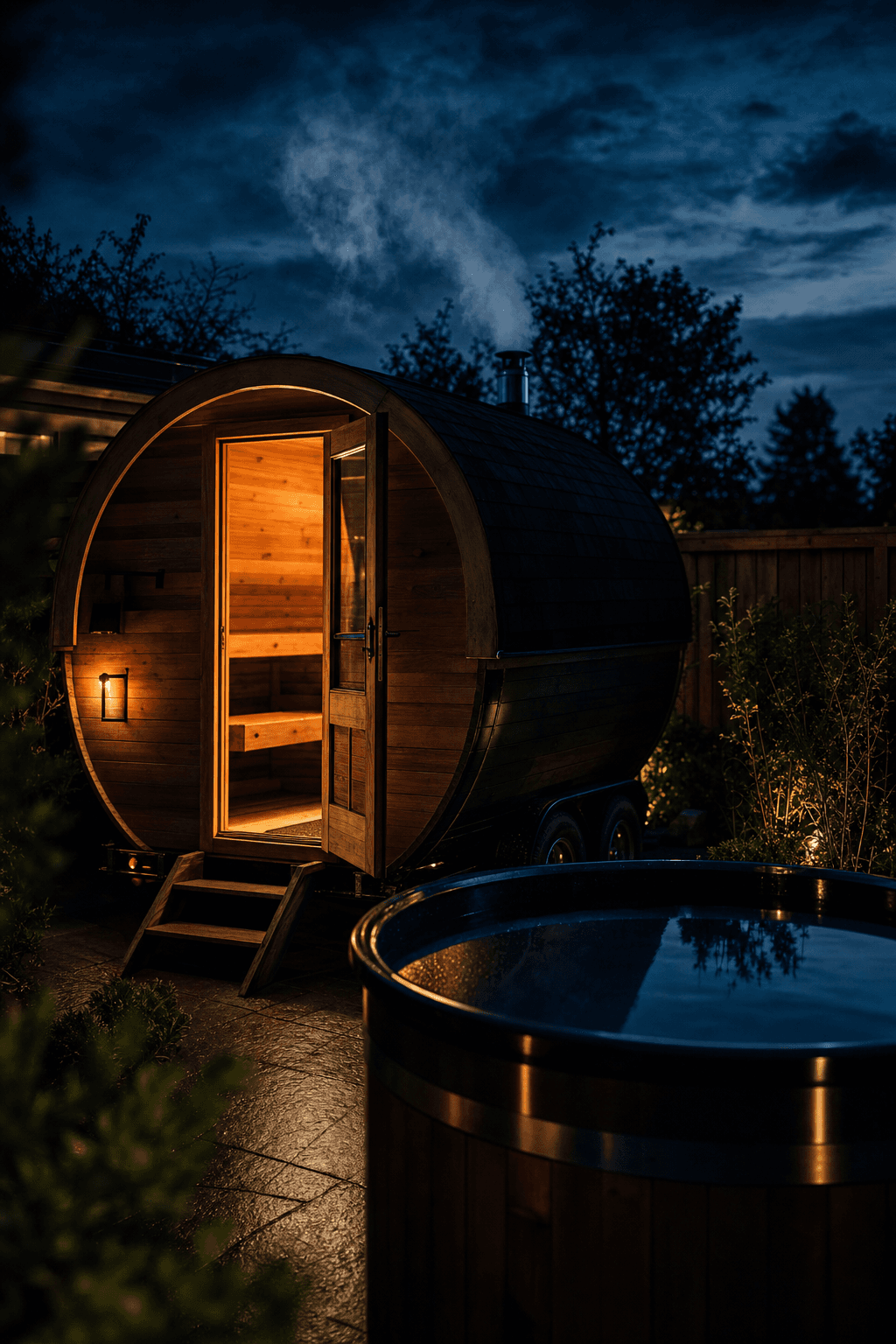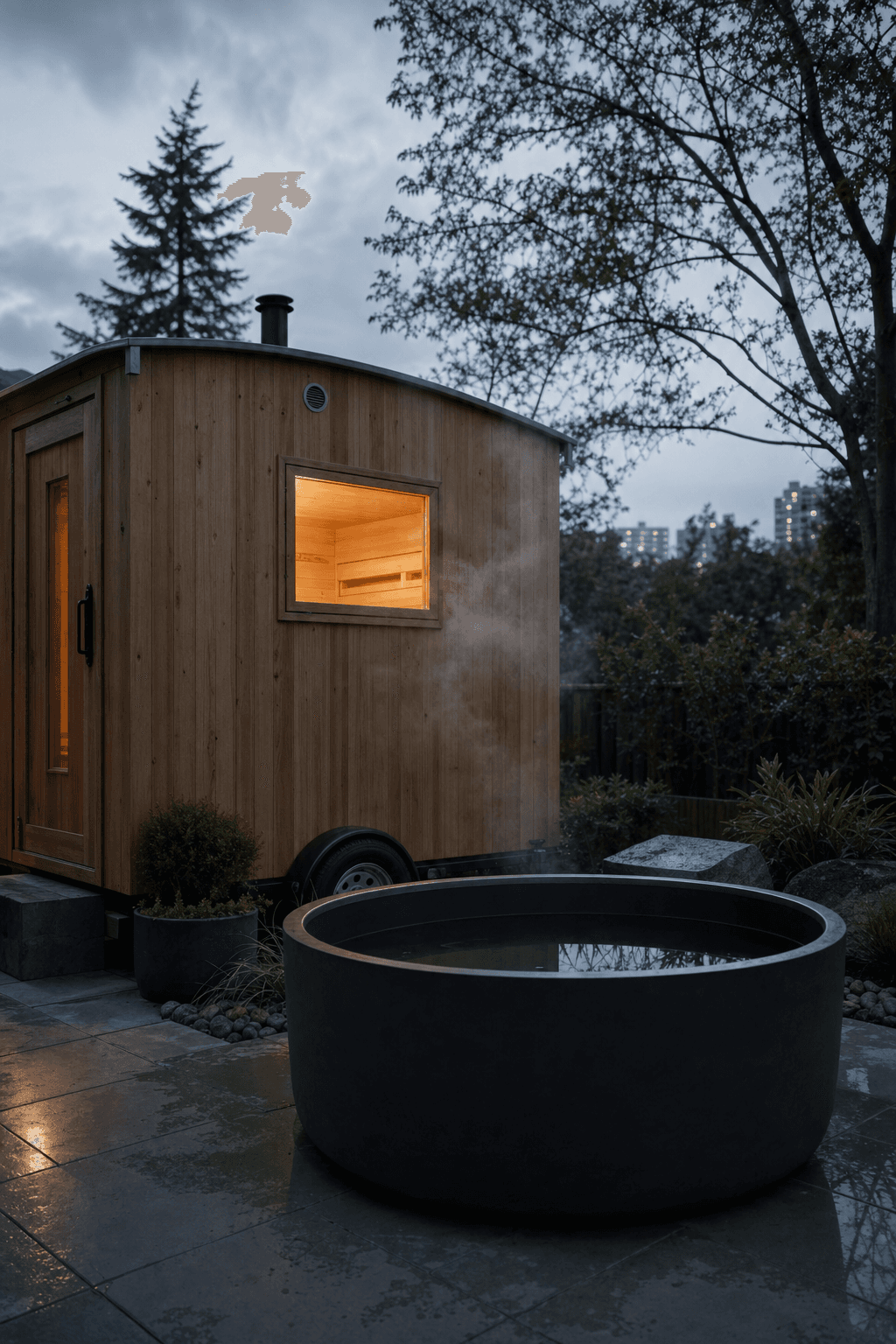
Sauna and cold plunge mental health benefits include lowering cortisol levels, improving sleep quality, and boosting mood through the release of endorphins. This contrast therapy practice helps reset the nervous system to manage stress while building mental resilience against anxiety and depression. Consistent sessions also enhance cognitive function and clarity by reducing inflammation and promoting deep relaxation.
You are sharp, capable, and completely exhausted. Deadlines stack up, sleep suffers, and the mental fog that follows you into every meeting is becoming harder to ignore. For Vancouver professionals navigating one of North America's most competitive and expensive cities, burnout is not a personal failure; it is a predictable outcome of sustained high pressure without adequate recovery. What if the most effective reset available was not another productivity app or meditation course, but a physiological intervention backed by decades of neuroscience research? In this article, you will learn exactly how sauna and cold plunge work on the brain, which specific mental health benefits the science actually supports, and how Vancouver professionals are building contrast therapy into their routines to perform better and feel human again.
TL;DR: What Sauna and Cold Plunge Do for Your Mental Health
Yes, sauna and cold plunge are genuinely good for mental health, and the evidence is clinical rather than anecdotal. Sauna lowers cortisol, triggers beta-endorphin release, and activates the parasympathetic nervous system; cold plunge drives norepinephrine up by as much as 300% and elevates dopamine, two neurotransmitters directly tied to mood and anxiety regulation. Used together as contrast therapy, the two modalities reduce anxiety, improve sleep quality, and train the nervous system to recover faster from stress. The sauna and cold plunge mental health benefits covered in this article are drawn from peer-reviewed research, including a January 2026 study published in the Annals of Medicine and Surgery, and applied to the specific recovery demands facing professionals in Vancouver.
Why Vancouver Professionals Are Burning Out Faster Than Ever
Vancouver sits in one of the most enviable locations on the planet, mountains to the north, ocean to the west, and world-class trails within 30 minutes of downtown. Yet for the professionals driving Vancouver's tech, finance, and real estate sectors, that natural beauty often functions as a backdrop they rarely get to experience. When your rent or mortgage in Kitsilano or East Van consumes 40 to 50 percent of your income, you don't take afternoons off to hike Cypress.
The financial pressure is structural, not personal. Statistics Canada data consistently shows that British Columbians carry some of the highest household debt-to-income ratios in the country, and the Mental Health Commission of Canada estimates that mental health issues cost Canadian employers over $50 billion annually in lost productivity and absenteeism. For Vancouver professionals specifically, that pressure compounds. Commutes from Burnaby, Surrey, or Coquitlam into downtown can run 60 to 90 minutes each way on a bad day. Tech sector deadlines don't pause for traffic.
The result is a nervous system that rarely gets a genuine reset. Scrolling through a phone on the SkyTrain is not recovery. A glass of wine after dinner is not recovery. What the research increasingly supports is that deliberate, physiological interventions like sauna and cold plunge create the kind of parasympathetic activation that stressed nervous systems actually need. That is not a luxury framing; it is a clinical one, and the distinction matters for professionals who are already skeptical of anything that sounds like a spa day.
The Science Behind Sauna and Mental Health: What the Research Actually Shows
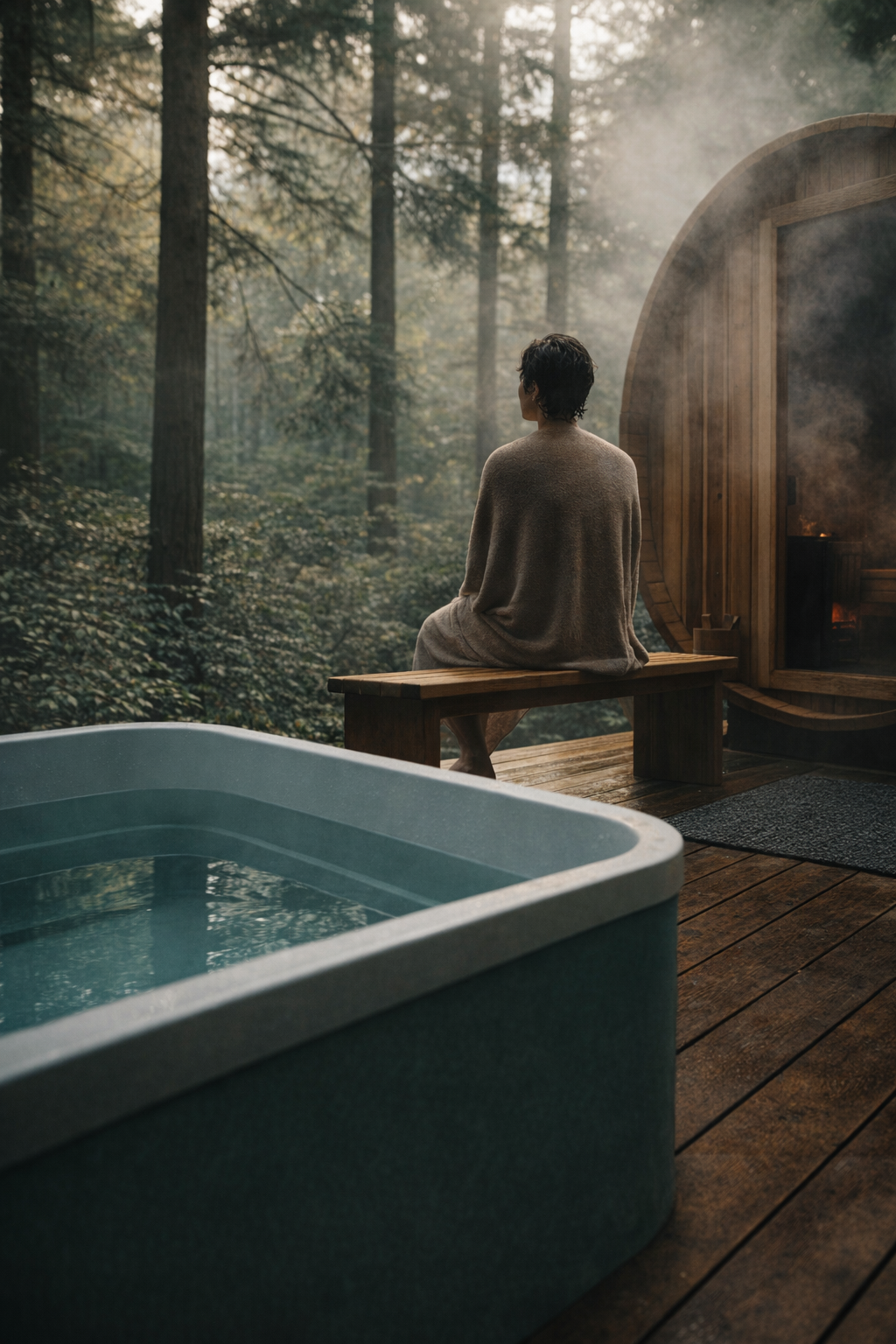
That clinical framing matters because the research behind it is more substantive than most wellness content lets on. A January 2026 study published in the Annals of Medicine and Surgery (PMC12889280) synthesized the evidence on sauna bathing and mental health, and the findings are worth understanding in specific terms rather than vague generalities.
The most immediate effect of heat exposure is neurochemical. Sauna use triggers the release of beta-endorphins, the same endogenous compounds associated with the post-exercise mood lift, while simultaneously activating the parasympathetic nervous system. That combination produces a measurable shift away from the physiological stress state that most Vancouver professionals spend the majority of their working hours in. Cortisol, the primary stress hormone, drops. The nervous system moves from reactive to restorative.
What makes the research particularly compelling is the cellular layer beneath that. Heat exposure activates heat shock proteins and reduces inflammatory cytokines, the same inflammatory markers that appear consistently elevated in people with clinical depression. This is not a coincidence. The emerging understanding in psychiatry treats depression partly as an inflammatory condition, which means sauna's anti-inflammatory effects have direct relevance to mood, not just muscle recovery.
The longitudinal data reinforces this. Across multiple studies reviewed in the 2026 paper, consistent sauna use was associated with reduced psychological distress scores, improved emotional regulation, and better sleep quality. One finding stands out for its specificity: participants who used a sauna once daily for four weeks reported meaningful reductions in depression symptoms, including reduced anxiety and improved appetite. Both are clinically recognized markers of mood disorder recovery.
The sauna and cold plunge mental health benefits most people associate with wellness culture turn out to have a rigorous physiological basis. And for professionals whose stress response is chronically activated, that mechanism matters.
Cold Plunge and Anxiety: The Norepinephrine Effect
If sauna works on anxiety primarily through the nervous system's passive relaxation response, cold plunge works through something closer to the opposite mechanism, and that distinction matters when you're deciding which tool to use and when.
Cold water immersion triggers an immediate and dramatic neurochemical response. Norepinephrine, the neurotransmitter responsible for attention, focus, and mood regulation, spikes by as much as 300% during cold exposure. Dopamine rises sharply as well. For anxiety specifically, these are not trivial numbers. Norepinephrine plays a central role in how the brain allocates attention and regulates threat perception; dopamine governs motivation and emotional steadiness. A 300% surge, even a temporary one, creates a measurable shift in how the nervous system is operating.
The mechanism that makes cold plunge particularly valuable for anxiety is hormetic: the body experiences a genuine stressor, activates the fight-or-flight response fully, and then, as the initial shock resolves, transitions into a deep parasympathetic recovery state. That cycle, acute activation followed by enforced calm, is essentially a training stimulus for the nervous system. Repeated regularly, it builds the capacity to return to baseline more quickly after real-world stress triggers. The cold water does not eliminate the discomfort; it teaches the body to move through it.
This is where cold plunge may have a practical edge over sauna for anxiety management. Sauna is passive. You sit, heat accumulates, and the parasympathetic response arrives without much active effort on your part. Cold plunge requires deliberate regulation in real time: controlled breathing, focus, and the choice to stay present under duress. That active regulation practice transfers directly to high-pressure professional situations in a way that passive relaxation does not.
Sauna and cold plunge mental health benefits are real in both cases, but they are not identical. Sauna excels at deep recovery and cortisol reduction. Cold plunge trains the anxiety response at its root. Used together, they address both ends of the stress cycle.
Contrast Therapy as Mental Training: Building Resilience for High-Pressure Work
The active regulation that cold plunge demands, and the deep recovery that sauna delivers, point toward something more significant than stress relief. Used together in deliberate sequence, they constitute a form of mental resilience training that most wellness content does not adequately name or explain.
The mechanism is hormesis: controlled, short-duration stress that forces the nervous system to adapt. Heat and cold both qualify as genuine stressors in the physiological sense. The body's response to each is real, not simulated. But because the duration is controlled and the environment is safe, the nervous system processes each session as a challenge it successfully navigated. Over weeks, the adaptation accumulates. The nervous system becomes demonstrably better at returning to baseline after activation, which is precisely the capacity that breaks down under chronic professional stress.
For a Vancouver professional managing a difficult client call, a high-stakes board presentation, or a week of compounding deadlines, that adaptation is not abstract. It translates to a calmer threat response, faster emotional recovery between demands, and clearer decision-making under pressure. These are trainable qualities, and contrast therapy trains them directly.
What separates Nordic Edge from the generic wellness framing of this benefit is practicality. Nordic Edge mobile sauna and cold plunge services come to your location, whether that is a home in North Vancouver, a Yaletown condo building, or a West End outdoor space. The commute to a shared spa facility is itself a stressor. Removing it means the mental resilience training actually happens consistently, which is where the results live.
Better Sleep, Clearer Focus: The Downstream Mental Health Benefits
That accumulated nervous system adaptation has a downstream effect that most contrast therapy content glosses over: it dramatically improves sleep, and better sleep is where a significant portion of the mental health benefit actually lands.
The mechanism is straightforward. Sauna raises core body temperature by two to three degrees Celsius. When you exit the heat and begin cooling, that temperature drop mimics the natural decline the body uses to signal sleep onset. The result is faster sleep initiation, and more importantly, more time in slow-wave sleep, the deep, restorative stage that governs emotional processing, memory consolidation, and next-day cognitive performance. Cold plunge after sauna amplifies this by accelerating the cool-down and deepening the parasympathetic state you carry into the evening.
For a Vancouver professional, the practical implication is direct. A Thursday evening contrast session means arriving at Friday's meetings with a nervous system that has actually recovered rather than one running on accumulated deficit. The 2026 Annals of Medicine and Surgery research found that consistent sauna use reduced psychological distress scores and improved emotional regulation, outcomes that are inseparable from sleep quality.
This matters because poor sleep is not just a symptom of anxiety and depression; it actively sustains both. Addressing the sleep layer is one of the highest-leverage things a stressed professional can do for their mental health, and sauna and cold plunge mental health benefits reach it through a route that feels nothing like clinical intervention.
How Often Should You Use Sauna and Cold Plunge for Mental Health Benefits?
Knowing that contrast therapy works is one thing; knowing how often to use it for mental health specifically is where most people stall. Physical recovery protocols are widely discussed, but the frequency question for mood, anxiety, and stress resilience has a different answer.
The research points to 2 to 4 sessions per week as the meaningful threshold for mood and anxiety benefits. The 4-week mark is particularly significant: the longitudinal data reviewed in the 2026 Annals of Medicine and Surgery study identifies this as the point where depression symptom reduction becomes measurable, not as a fleeting acute effect but as a sustained shift in baseline psychological state. Consistency, not session length, is the operative variable.
A practical starting protocol for mental health looks like this: 15 to 20 minutes in the sauna, followed by 2 to 3 minutes in the cold plunge, repeated for 2 to 3 rounds per session. Total time runs well under 90 minutes. That structure is manageable, and it maps directly onto what the research supports.
A single session also carries real value. The acute norepinephrine and endorphin response means contrast therapy is genuinely useful the evening before a high-stakes presentation or after a week that has pushed your stress tolerance to its edge.
This is where Nordic Edge mobile sauna and cold plunge services change the practical math. Building a 3-session weekly habit does not require a gym membership, a downtown commute, or coordinating schedules around shared facility availability. The service comes to you, which removes the friction that typically causes wellness habits to collapse within the first month.
Why Mobile Sauna and Cold Plunge Fits the Vancouver Professional Lifestyle
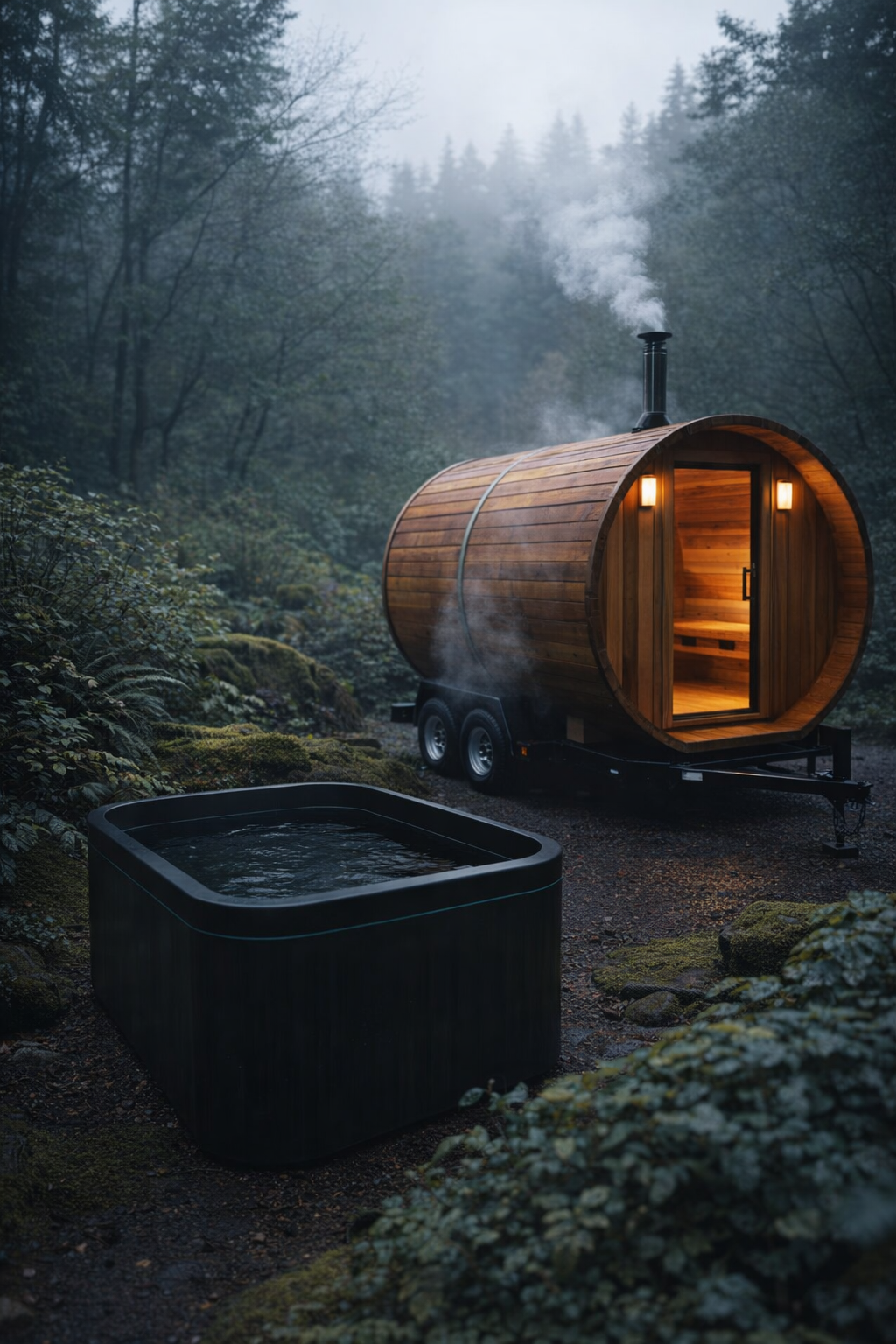
Building a consistent contrast therapy habit requires removing friction, and for Vancouver professionals, the single biggest source of friction is logistics. Commuting to a fixed facility after a full workday, finding parking near a downtown spa, waiting for a shared sauna to clear, and managing the return trip home adds 45 minutes to an hour to every session. That overhead is precisely what makes wellness habits unsustainable for people with demanding schedules.
Nordic Edge mobile sauna and cold plunge services eliminate that entirely. The equipment arrives at your location, is set up on your timeline, and the experience is entirely private. No shared locker rooms, no strangers cycling through the same equipment, no ambient noise from a commercial facility. A group session on a Kitsilano deck after work, a solo reset at a West Vancouver home before a demanding week, or a corporate wellness event hosted in Gastown or Yaletown each become genuinely practical rather than aspirational.
That privacy dimension matters more than it might initially seem. For professionals accustomed to managing their image and environment, the ability to decompress fully without a social performance layer is itself part of the recovery. The session works better when you are not self-conscious about it.
The premium nature of the experience is also the point. Sauna and cold plunge mental health benefits accumulate through consistency, and consistency requires an experience worth returning to.
Getting Started with Contrast Therapy for Stress Relief in Vancouver
Starting is simpler than most people expect, and the barrier is lower than the cold water makes it sound.
The first step is to book a session with Nordic Edge and let the logistics handle themselves. The equipment arrives at your location, the protocol is guided, and you don't need any prior experience with sauna or cold plunge to get meaningful benefit from the first session. Second, treat that initial session as an orientation: experience the full contrast sequence, notice how your nervous system responds in the hours afterward, and use that as your baseline. Most people are surprised by how quickly the acute intimidation of the cold plunge gives way to a clarity that lasts well into the evening. Third, build the habit from there, two to three sessions per week is the threshold where the research-supported mood and anxiety benefits compound into something lasting.
On the common hesitations: the cold plunge is briefly uncomfortable, not unbearable, and that discomfort is precisely the mechanism. A full session runs under 90 minutes. The cost is comparable to a session with a therapist or performance coach, and the physiological return is measurable.
Vancouverites already know that an hour in the mountains or at the ocean shifts something fundamental in how they feel. Nordic Edge mobile sauna and cold plunge services bring that same reset to your doorstep, on your schedule, without the drive.
Incorporating sauna and cold plunge routines into your busy professional life can provide a much needed mental reset, helping you manage stress and improve focus throughout the work week. While these habits are powerful on their own, the right environment makes all the difference in achieving long term results. If you would like expert help in creating a personalized wellness space that fits your lifestyle, you can learn more about our approach to high quality recovery solutions. Our team is here to guide your journey.