
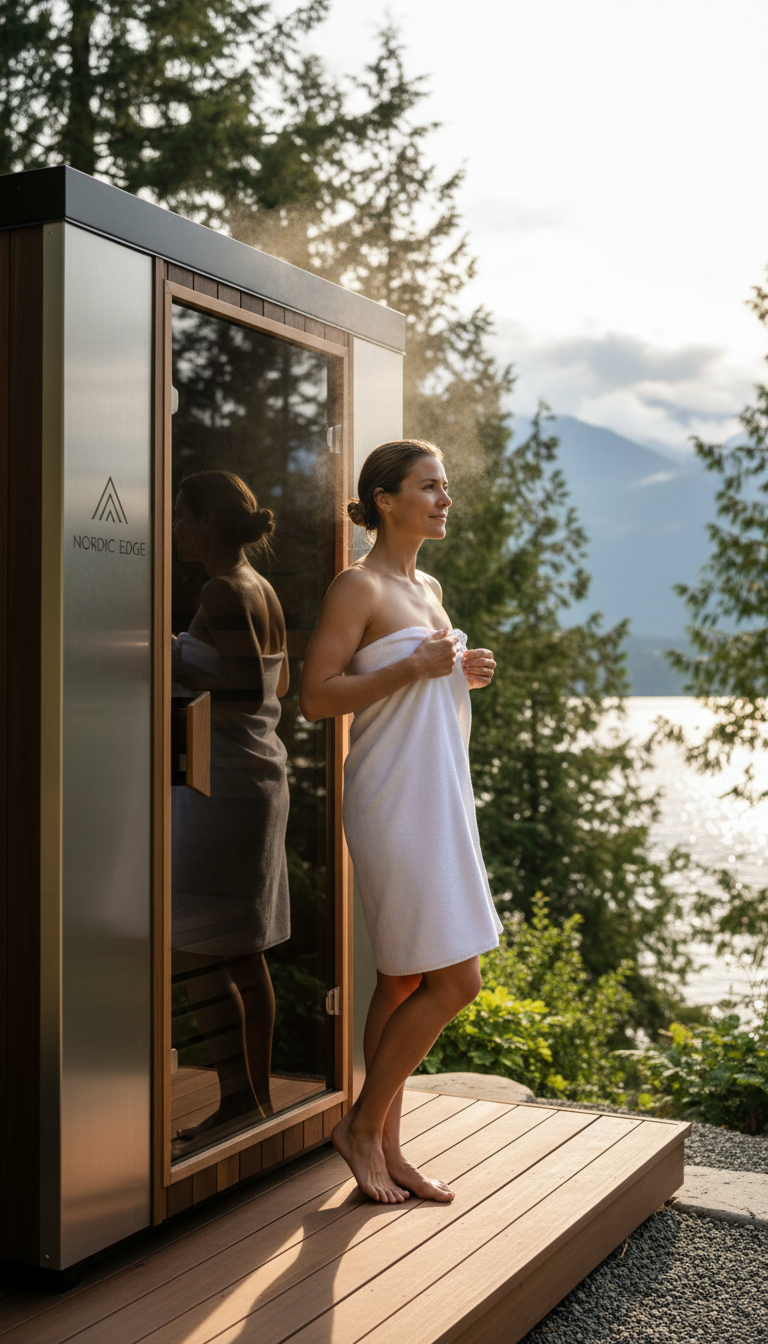
Consistent heat and cold exposure strengthens the autonomic nervous system by training the body to transition efficiently between stress and recovery states. Learning how to improve HRV with sauna and cold plunge involves regular sessions that can increase baseline scores by up to 20 percent over time; these practices enhance parasympathetic activity and overall stress resilience.
Your HRV score keeps sliding, your recovery feels incomplete, and no amount of sleep optimization or meditation apps seems to move the needle in a meaningful way. For busy Vancouver professionals managing high-output schedules, this is a frustratingly common ceiling to hit. Heart rate variability is one of the most reliable windows into your autonomic nervous system's resilience, and the research increasingly points to contrast therapy, specifically the strategic pairing of sauna and cold plunge, as one of the most potent tools available for shifting it upward. In this guide, you will learn exactly how heat and cold each act on your nervous system, why combining them produces effects that neither delivers alone, and how to build a protocol around your Vancouver lifestyle that generates measurable HRV improvements within weeks.
TL;DR: Can Sauna and Cold Plunge Actually Raise Your HRV?
Yes, combining sauna and cold plunge through contrast therapy can measurably improve HRV, with studies showing a 10-20% increase in baseline scores over several weeks of consistent use. The mechanism is straightforward: alternating heat and cold trains the autonomic nervous system to shift more efficiently between its sympathetic and parasympathetic states, and that flexibility is precisely what a higher HRV reflects. The combination outperforms either modality alone because each stimulus works through a distinct physiological pathway, and together they create a compounding adaptation effect. If you want to know how to improve HRV with sauna and cold plunge in a way that actually moves the needle on your Oura or Whoop data, the protocol and evidence are below.
What Is HRV and Why Do Busy Professionals Track It?
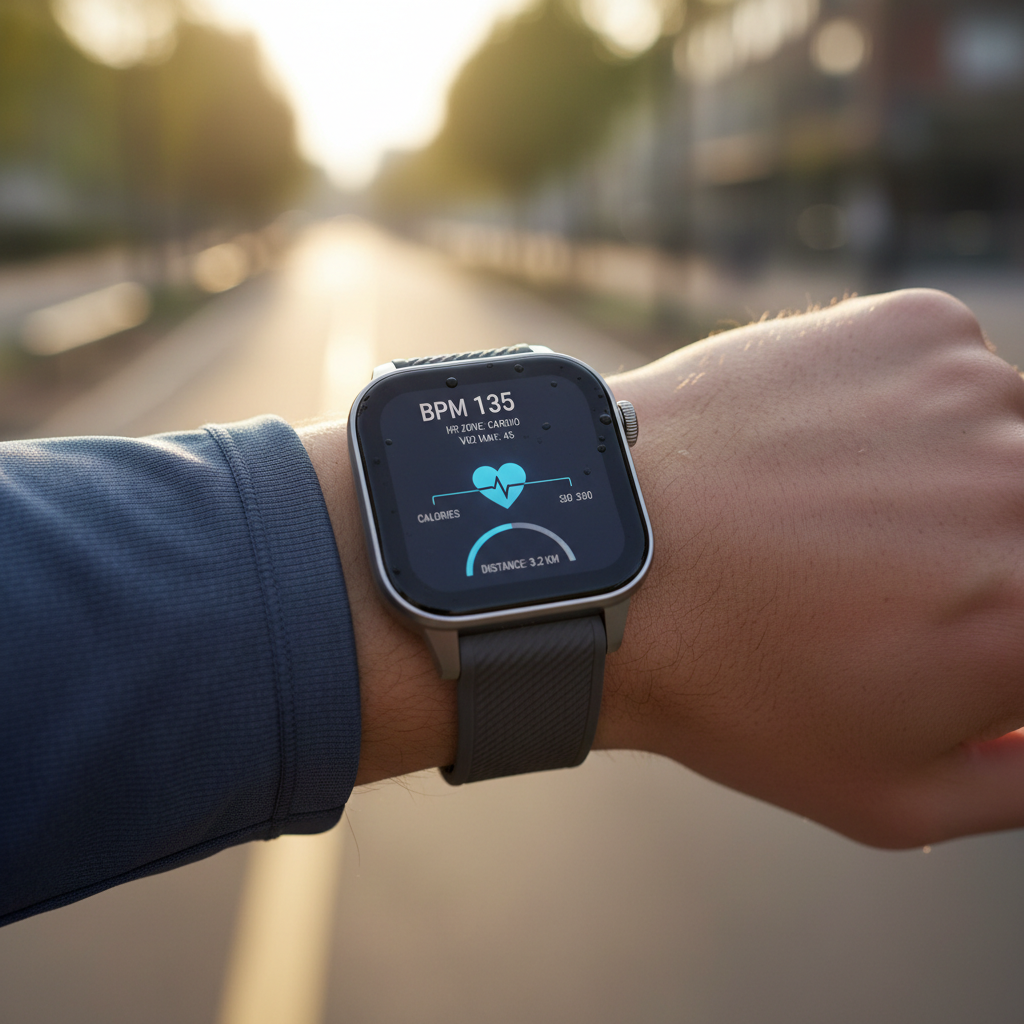
Heart rate variability is the variation in time, measured in milliseconds, between consecutive heartbeats. A common misconception is that a steady, metronome-like heartbeat signals good health. The opposite is true. A heart that subtly speeds up and slows down in response to each breath and environmental cue reflects a nervous system that is flexible, adaptive, and well-recovered. A flat, rigid interval pattern signals the opposite.
For high-achieving professionals in Vancouver, HRV has become one of the most actionable metrics available because it cuts through the noise of subjective self-assessment. Devices like the Oura Ring, Whoop, and Apple Watch now surface HRV data every morning, giving you a concrete number that reflects your actual recovery readiness, not just how many hours you logged in bed. A suppressed HRV score tells you, before your calendar does, that your system is already under load.
The problem is that modern professional life is structurally hostile to HRV. Back-to-back video calls, extended screen time, the cognitive overhead of a packed commute, and fragmented sleep all keep the sympathetic nervous system chronically engaged. The parasympathetic side, the branch responsible for recovery and repair, rarely gets a clean window to do its job.
The longevity dimension matters here too. Higher baseline HRV is associated with meaningfully lower lifetime cardiovascular risk, which means the number on your Whoop app is not just a performance metric. It is a signal worth taking seriously over the long term.
How Heat Exposure in a Sauna Improves HRV
Sauna improves HRV through a two-phase mechanism, and understanding both phases explains why the timing and consistency of sessions matter as much as the heat itself.
During the session, your heart rate climbs to 100-150 bpm as core temperature rises. This is a sympathetic nervous system activation, a controlled hormetic stressor that your body registers as a demand worth adapting to. The heat is not passive relaxation. It is a deliberate physiological challenge.
The more important phase happens after you step out. Within 1-2 hours post-session, a parasympathetic rebound follows: blood pressure normalizes, heart rate settles, and HRV rises measurably above your pre-session baseline. Repeat that pattern 3-4 times per week, and the cumulative effect is a strengthening of vagal tone, the underlying quality that determines how well your autonomic nervous system recovers between stressors.
A 2019 study documented an average HRV increase of 15% from baseline after infrared sauna use three times weekly over eight weeks. That is a meaningful and trackable shift for anyone monitoring their Oura or Whoop data.
One honest nuance worth naming: a 2025 NIH study found that adding sauna immediately post-exercise did not produce HRV benefits beyond exercise alone. Sauna appears to earn its HRV gains most clearly as a standalone session or when paired with cold exposure, which is where contrast therapy becomes the more compelling protocol compared to heat alone.
How Cold Plunge Activates the Vagus Nerve and Spikes HRV
Where sauna earns its HRV gains gradually through repeated post-session rebounds, cold plunge works faster and through a distinctly different pathway. The moment cold water contacts the face and neck, it triggers the mammalian dive reflex: an immediate, hardwired parasympathetic response mediated directly through the vagus nerve. Heart rate drops, peripheral circulation tightens, and HRV spikes acutely. Studies measuring this response document an immediate HRV increase of 10-30% during and right after immersion, which is a faster and more dramatic acute effect than sauna produces on its own.
The practical answer to whether cold plunge raises HRV is yes, and measurably so. For those new to the practice, a starting temperature of 13-15 degrees Celsius (roughly 55-60 degrees Fahrenheit) for 2-3 minutes is sufficient to engage the dive reflex without overwhelming the system. For Vancouver residents, that range will feel familiar; it sits close to the temperature of local ocean water through much of the year.
With consistent practice over several weeks, the acute spikes accumulate into genuine baseline HRV improvement, similar to how repeated sauna sessions build vagal tone over time.
The distinction between the two modalities is worth holding onto. Cold plunge produces a sharp, immediate parasympathetic response. Sauna produces a slower, sustained autonomic adaptation through repeated sympathetic challenge followed by recovery. Neither is categorically superior; they target complementary timescales of the same underlying system, which is precisely what makes combining them the more complete protocol.
Why Contrast Therapy Beats Either Alone: The Vascular Pump Effect
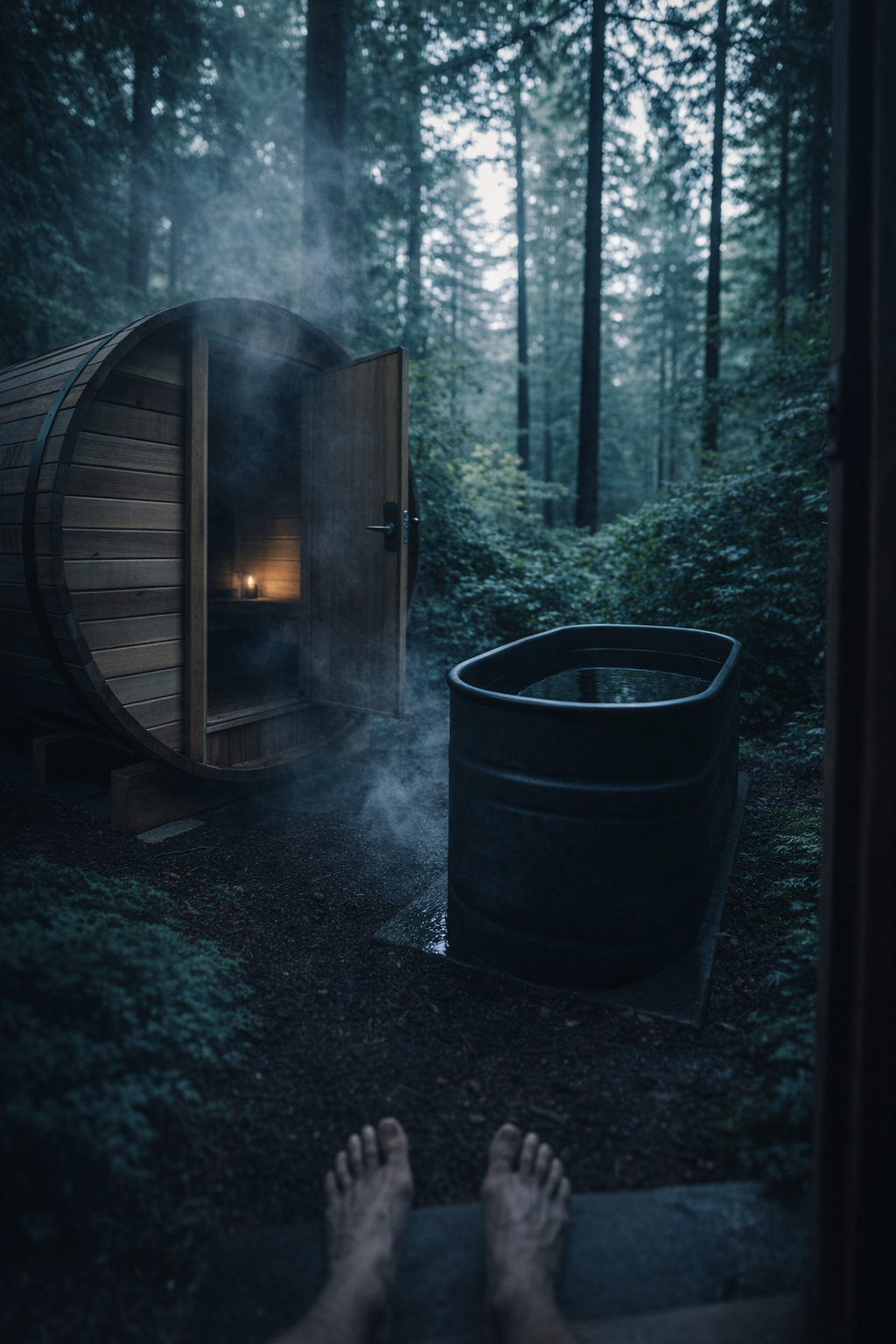
The previous two sections described sauna and cold plunge as separate mechanisms. The reason contrast therapy outperforms either alone comes down to what happens when you sequence them deliberately.
Heat dilates blood vessels and activates the sympathetic nervous system. Cold rapidly constricts those same vessels and triggers a strong parasympathetic rebound. Alternating between the two creates what researchers describe as a vascular pump: a forced oscillation between cardiovascular states that your autonomic nervous system has to keep up with. Over time, it does. The system learns to switch between sympathetic and parasympathetic modes faster and more completely, and that functional flexibility is precisely what a higher HRV score reflects.
This is hormetic stress working as intended. The challenge is manageable enough that the body treats it as a training signal rather than a threat, and adaptation follows. The acute effect is a larger combined HRV spike than either modality produces independently. The long-term effect is a more responsive autonomic nervous system across the rest of your week, not just during sessions.
On the practical question of sequencing: sauna first, cold plunge second. The reasoning is straightforward. Ending on cold produces the strongest parasympathetic rebound and leaves the nervous system in a settled, recovered state. Reversing the order blunts that effect. The cold plunge is most powerful as the final stimulus, not the opening one.
This sequence is also the foundation of how to improve HRV with sauna and cold plunge in a way that compounds across sessions rather than just producing isolated spikes.
The Contrast Therapy Protocol for HRV: Timing, Rounds, and Progression

Knowing the mechanism is one thing. Having a protocol you can actually follow is another.
Beginner (2x per week): One round of 15 minutes in the sauna followed immediately by 2-3 minutes in the cold plunge. This is enough stimulus to begin training the autonomic response without overwhelming a system that is not yet adapted to the oscillation.
Intermediate (3x per week): Two to three rounds per session, each consisting of 10-12 minutes of sauna and 2-3 minutes of cold plunge. Rest 5 minutes between rounds if needed. This is where most consistent practitioners see meaningful baseline HRV movement.
Advanced (3x per week or more): Three to four full rounds per session. At this stage, the nervous system has adapted enough to handle deeper oscillation, and the compounding HRV benefits become more pronounced.
For temperature, target 80-90 degrees Celsius in the sauna and 10-15 degrees Celsius in the cold plunge. On timing: morning sessions tend to produce sharper alertness and sympathetic activation that carries into the workday, while evening sessions lean toward parasympathetic dominance and improved sleep onset.
A useful safety heuristic worth knowing: keep the sum of your age plus sauna temperature under 200. A 40-year-old, for example, should stay below 160 degrees Celsius, which is well within normal range at the temperatures above.
Hydration is simple but often skipped: 500ml of water before and after each session. Heat and cold both shift fluid balance, and dehydration will blunt the HRV response.
For professionals without home equipment, this exact protocol is what mobile sauna and cold plunge services in Vancouver like Nordic Edge are built around, removing the setup barrier entirely.
Tracking Your HRV Progress: What to Expect Week by Week
The protocol above will produce results, but not linearly. Understanding the adaptation curve in advance keeps you from misreading early data as a sign that the approach is not working.
Weeks 1-2: You will likely see acute HRV spikes in the hours following each session. Your morning baseline, however, may dip slightly during this period. That is not a red flag; it is your nervous system registering the new demand. Treat it as confirmation the stimulus is real.
Weeks 3-4: Baseline HRV begins to climb. Most people also notice improved sleep quality during this window, often before their numbers reflect it. The parasympathetic rebound from repeated sessions is starting to carry over into overnight recovery.
Weeks 6-8: This is where the 10-20% baseline improvement documented in the research typically becomes visible. The gains are durable at this stage, not just post-session fluctuations.
For reliable tracking, measure HRV first thing in the morning before you get out of bed. A 7-day rolling average, available on Oura Ring, Whoop, and Apple Watch paired with a third-party HRV app, smooths out the daily noise and gives you a far more honest signal than any single reading.
One important caveat: stress, alcohol, poor sleep, and travel will suppress HRV regardless of how consistent your contrast therapy sessions are. The protocol builds capacity; lifestyle factors determine how much of that capacity actually shows up in your data.
Bringing Contrast Therapy to Your Vancouver Routine Without a Gym Membership
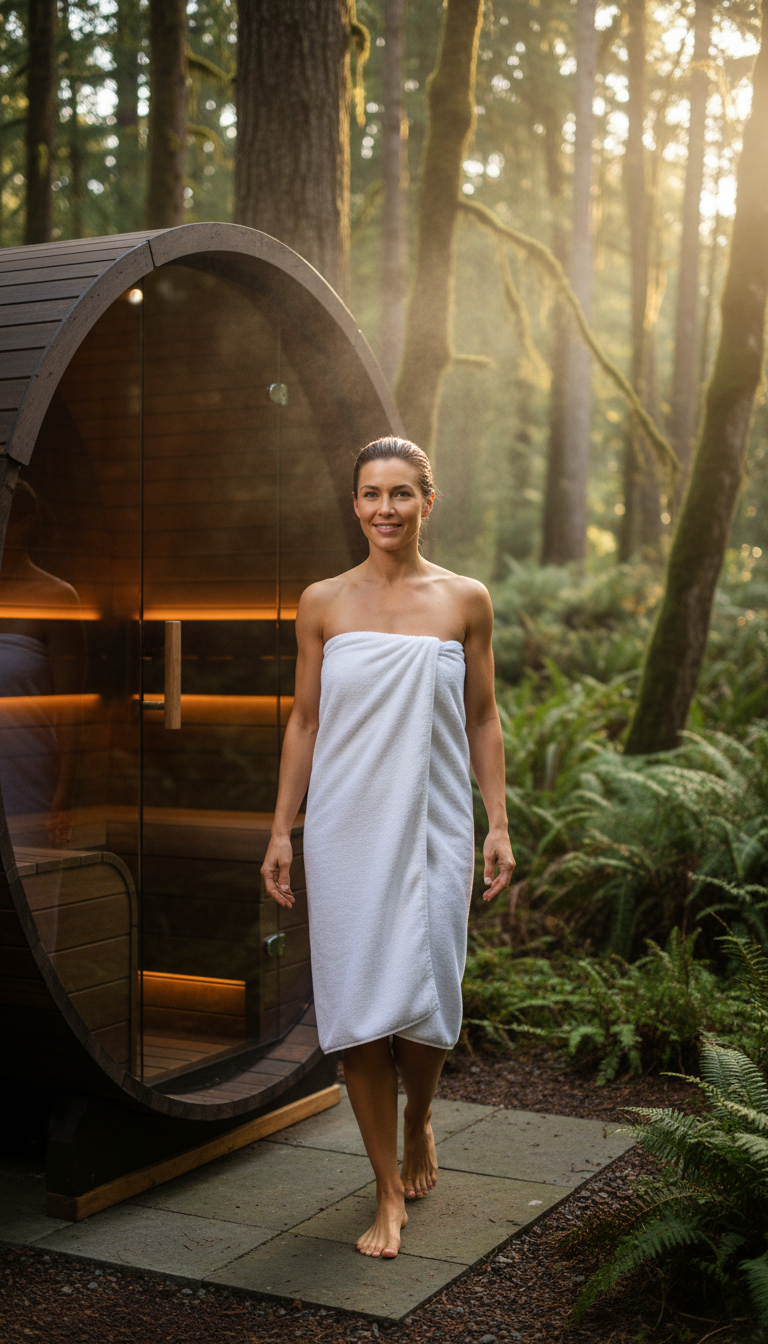
The week-by-week timeline above assumes one thing: reliable access to both a sauna and a cold plunge, at the right temperatures, in the right sequence. For most Vancouver professionals, that is where the protocol breaks down in practice.
Gym saunas rarely hit the 80-90 degree Celsius range consistently, and most do not pair with any cold plunge option at all. A warm shower after a lukewarm sauna is not the vascular pump effect described in this article. It produces none of the same autonomic oscillation, and your HRV data will reflect that gap.
Nordic Edge addresses this directly by bringing a mobile sauna and cold plunge to your location. A session in your Kitsilano backyard, a group recovery block in Mount Pleasant, or a team event in North Vancouver all follow the same contrast therapy sequence outlined above: proper sauna temperature, a calibrated cold plunge at 10-15 degrees Celsius, and the round structure that produces actual autonomic adaptation.
The logistical removal matters as much as the equipment. No commute to a spa, no waiting for equipment to free up, no truncating rounds because someone else is waiting. You follow the protocol as written, not a compromised version of it.
Details on session formats and availability are on the mobile sauna and cold plunge services in Vancouver page, or you can book a session with Nordic Edge directly.
Optimizing your HRV through sauna and cold plunge sessions is a transformative practice for managing the demands of a professional lifestyle. By balancing thermal stress, you can significantly improve your resilience and long-term health. If you feel that personalized guidance would help you reach your wellness goals more effectively; we invite you to learn more about our dedicated approach. Our team is ready to help you refine your recovery strategy whenever you are ready to take that next step.